Sparkling wine is one of my favourite categories to explore and not just during the holidays, but all year long. Whether you're hosting, gifting, or simply treating yourself to a cozy night in, bubbles have a way of making any moment feel special.
But with so many styles, sweetness levels, and regional names, choosing the right bottle can feel overwhelming. That’s why this month’s Wine 101 is dedicated to sparkling wine: what it is, how it’s made, the differences between popular styles, and how to pick a bottle you’ll love.
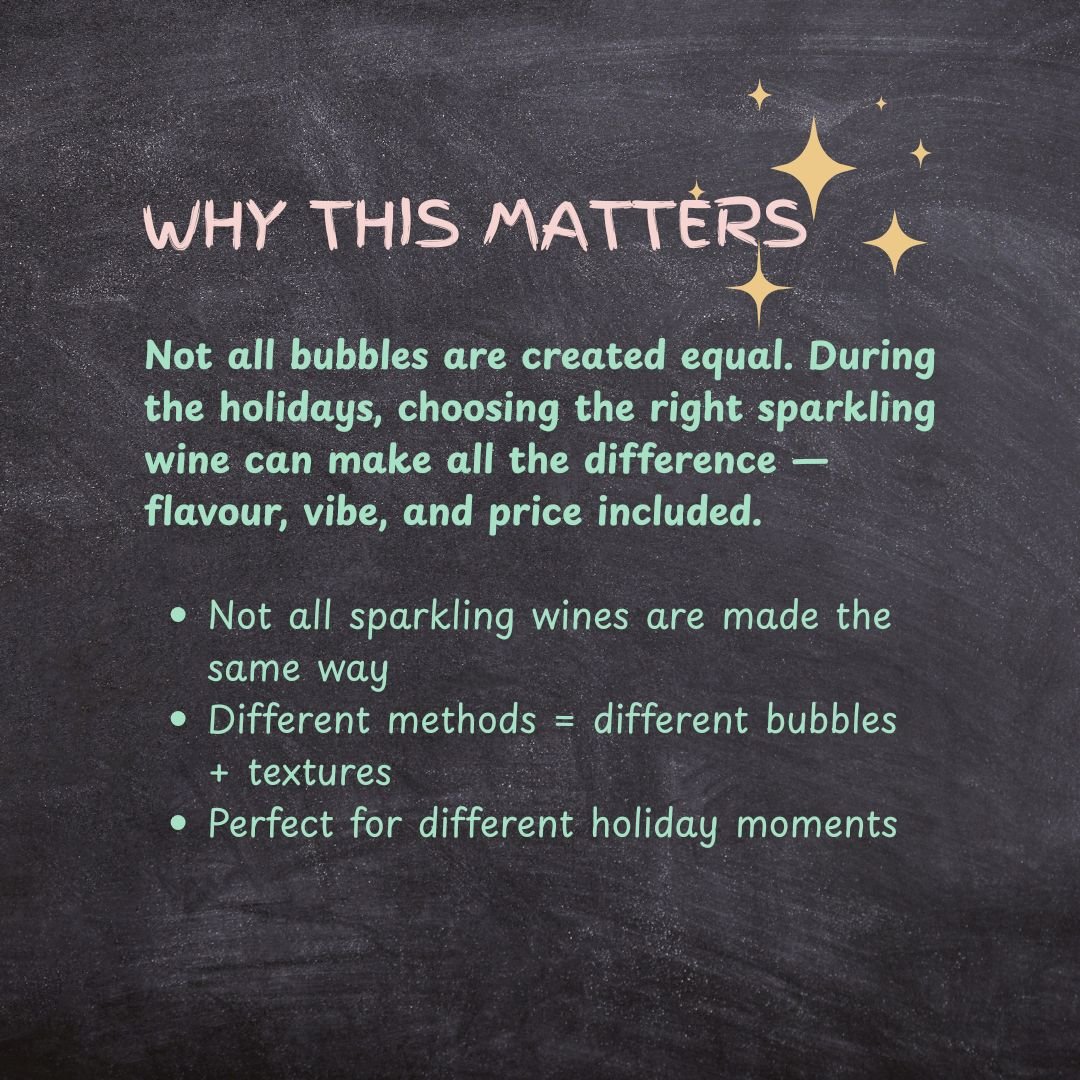
Sparkling wine gets its bubbles from a second fermentation — the process that creates carbon dioxide and traps it inside the bottle (or tank). Keep reading you you will learn what that means for flavour, texture, and quality.
Traditional Method (e.g., Champagne, Crémant, Cava, Ontario VQA Traditional Method)
If you love fine bubbles and toasty, brioche-like notes, this is the style to look for.
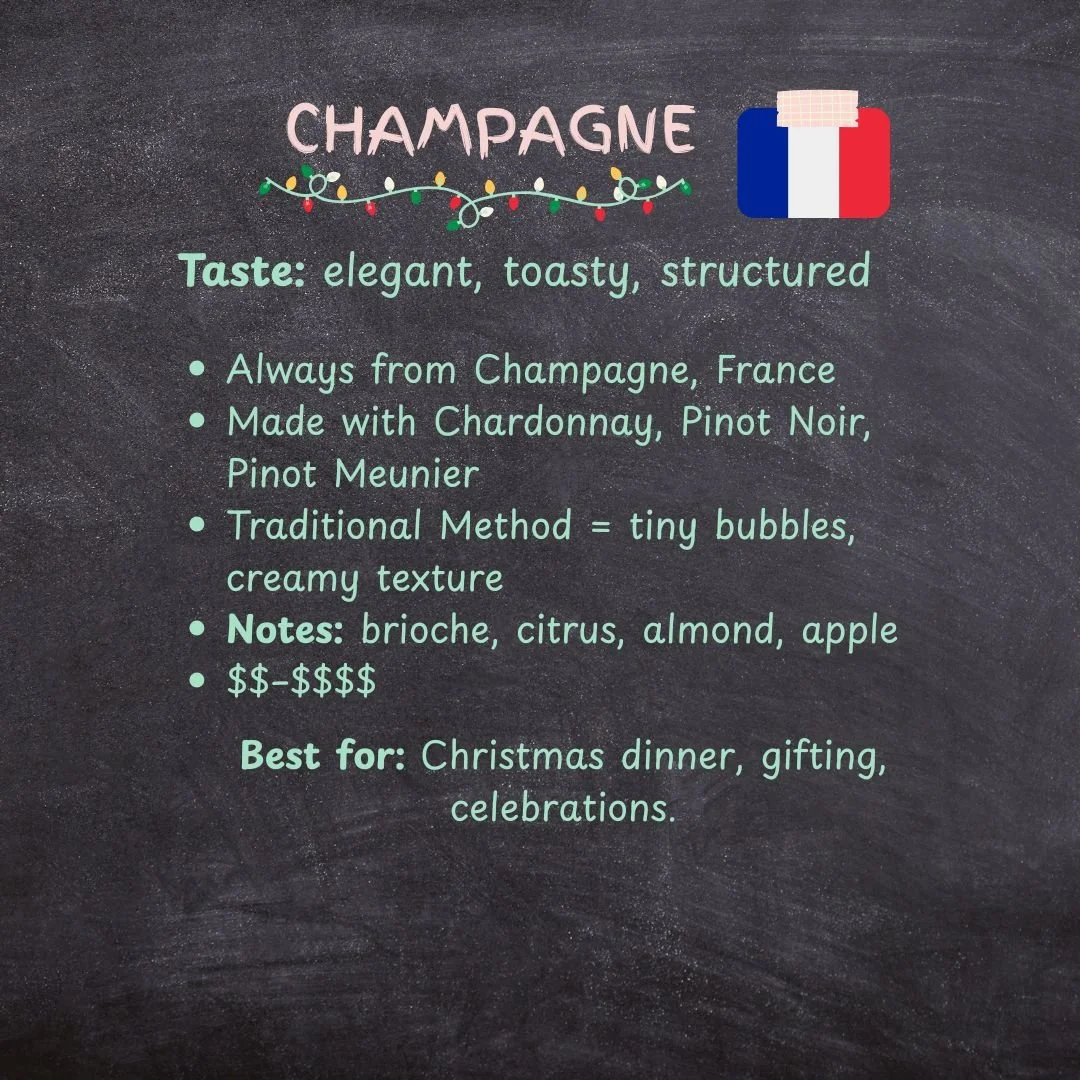
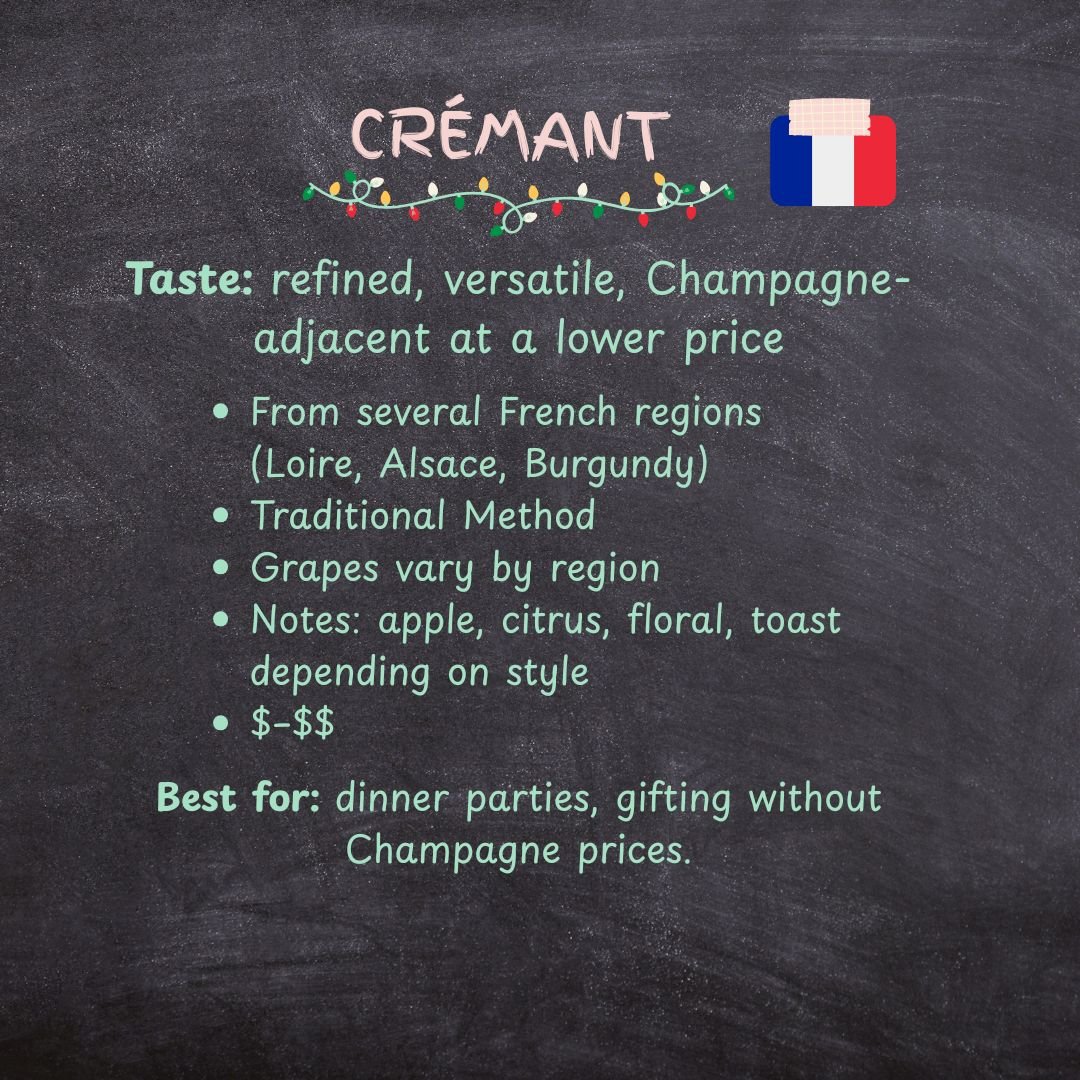
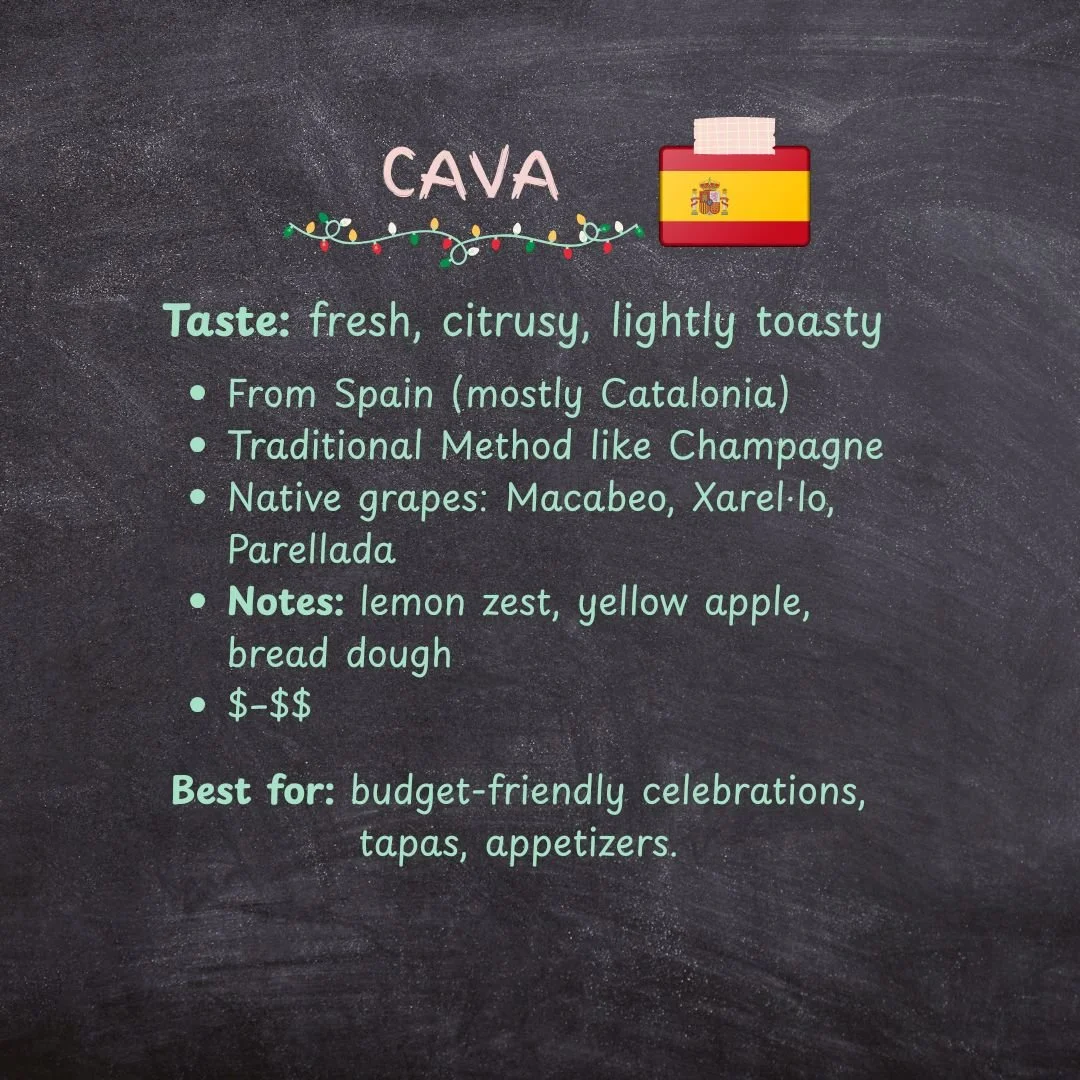
This method is the most labour-intensive and produces the most delicate bubbles.
Charmat Method (e.g., Prosecco)
For something fruitier, fresher, and more budget-friendly, the Charmat Method might be your match.
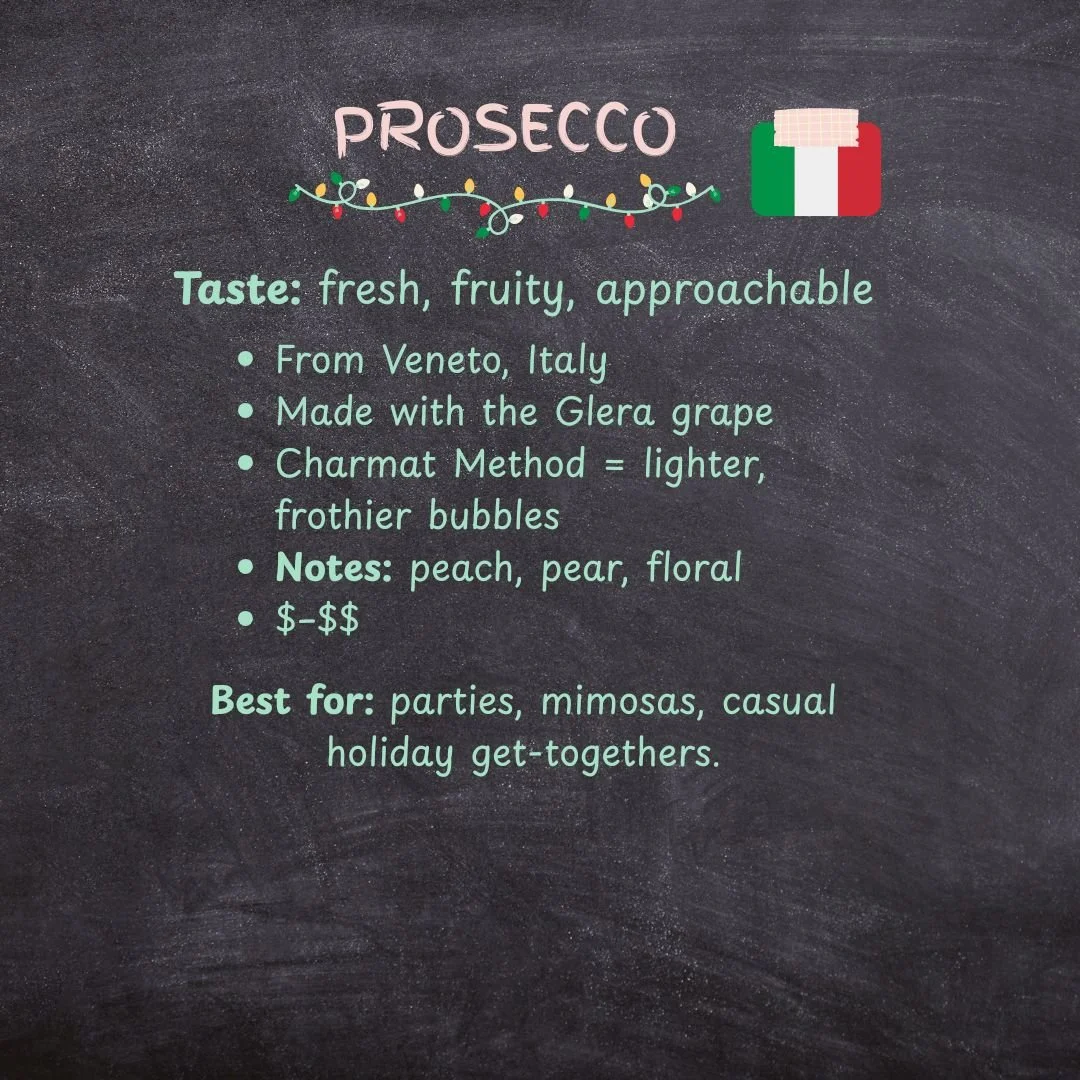
This method keeps the wine bright and youthful, making it ideal for brunch, spritzes, and simple holiday appetizers.
Other Styles: Pét-Nat, Lambrusco, etc.
Sparkling wine isn’t just Champagne vs. Prosecco — there are so many fun and diverse styles worth exploring. Each style has a unique technique and flavour profile, for example, Pét-Nat is rustic and unfiltered while Lambrusco is a sparkling red.
Sparkling Rosé
Sparkling Rosé is very versatile sparkling wine that can be made in any method listed above. It makes a great hostess gift.

Understanding Sweetness Levels
One of the biggest surprises for many people: Brut doesn’t mean “no sugar.”
Sweetness levels vary, and knowing them makes choosing a bottle much easier.
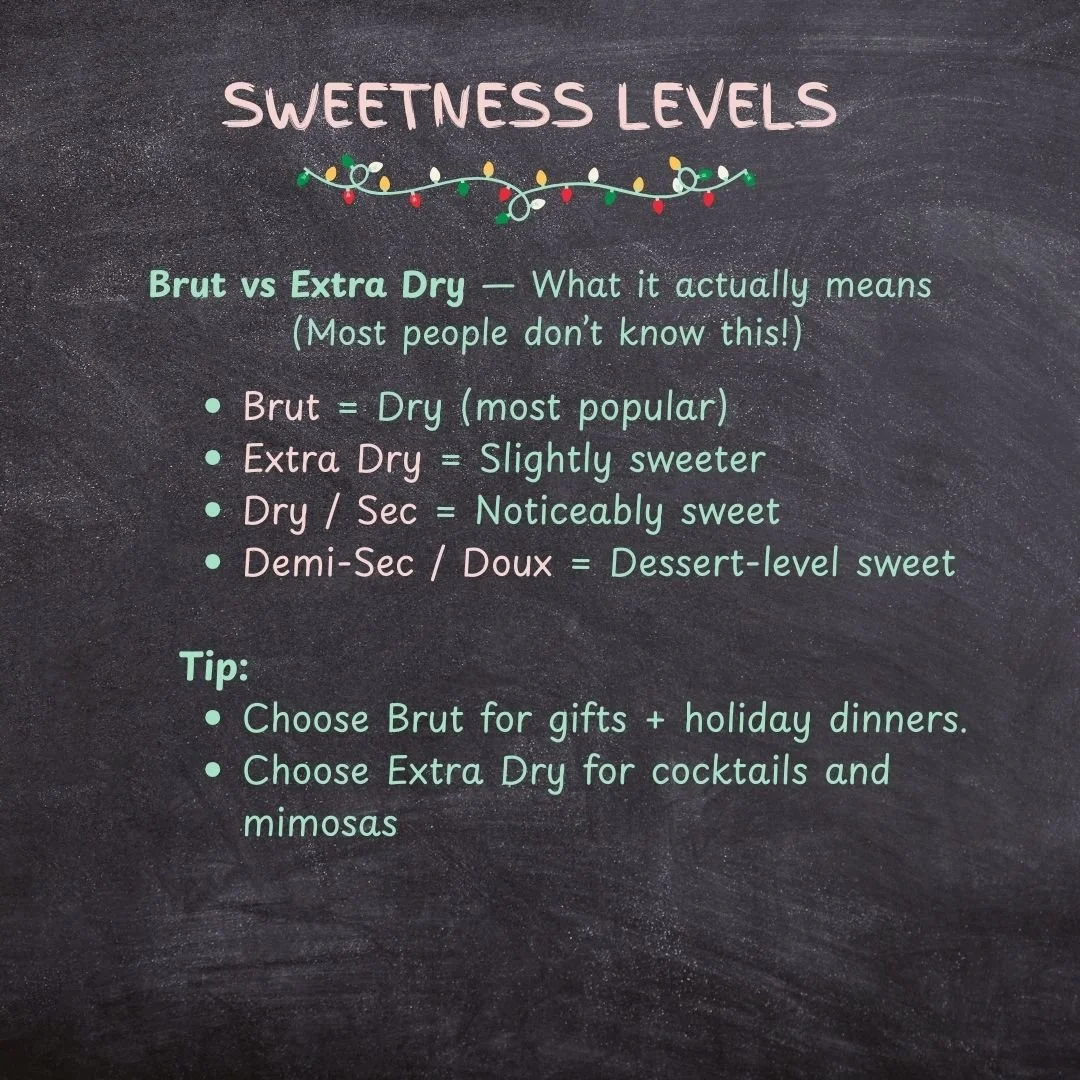
If you're unsure what to pick for a crowd, Brut or Extra Dry are the safest middle-ground options.
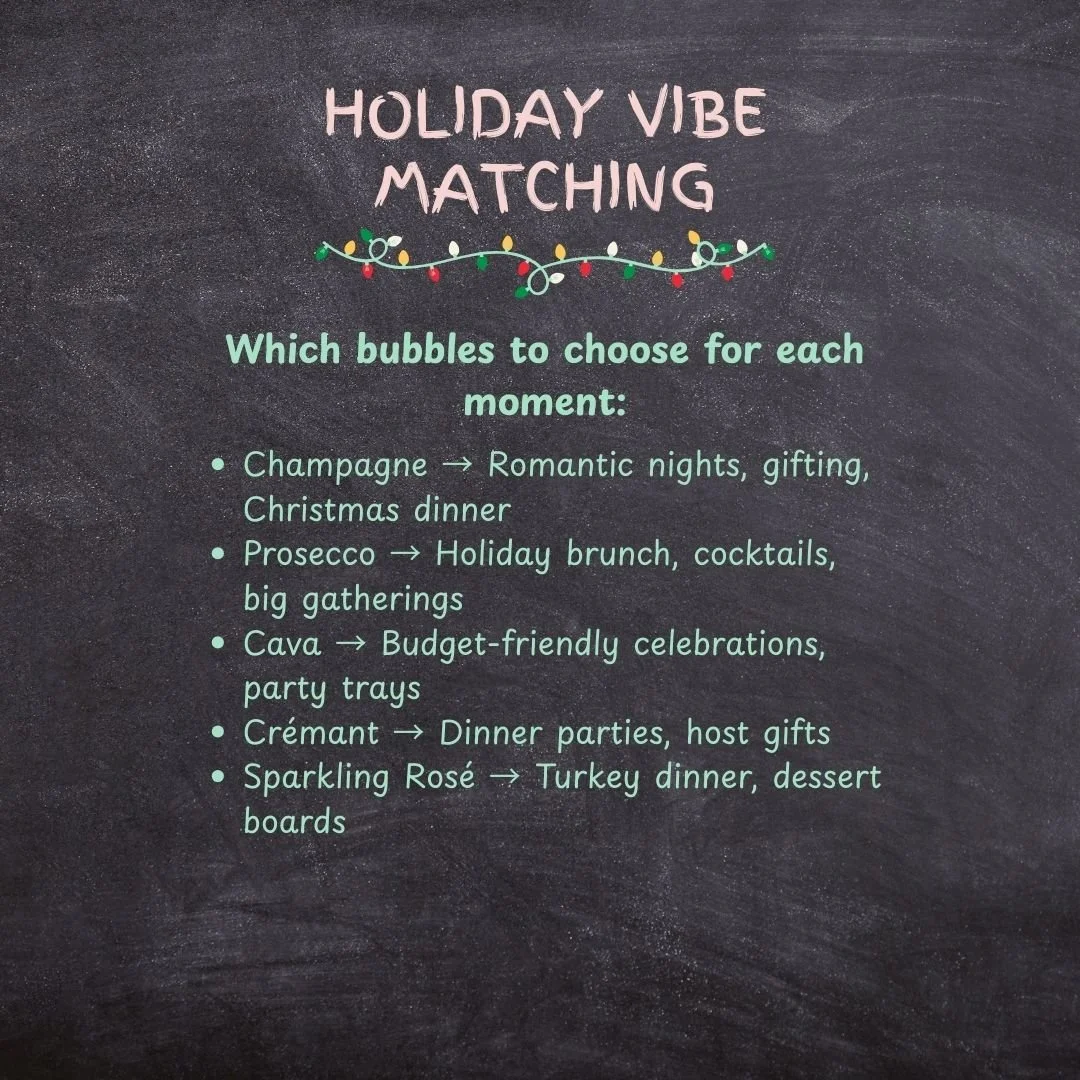
Wine labels can look intimidating, but most terms are actually very simple once you know what they mean. If you ever feel lost, look at the sweetness level first. That will give you the quickest insight into what’s inside the bottle.
Sparkling wine doesn’t have to be confusing. Once you understand the basic styles, sweetness levels, and key terms, choosing a bottle becomes fun instead of overwhelming. Whether you’re celebrating something special or just enjoying a quiet night in, there’s a sparkling wine out there for every taste and budget.
Cheers to sparkling season ✨