If you’ve ever stared at a wine label and thought: “Okay…but what does any of this mean?”, you are not alone. I’m breaking it all down so you can shop with confidence, discover what you actually love, and feel like the smartest person in the wine aisle.
Before diving into grape varieties, it helps to understand why Chile is such an incredible wine-producing country.
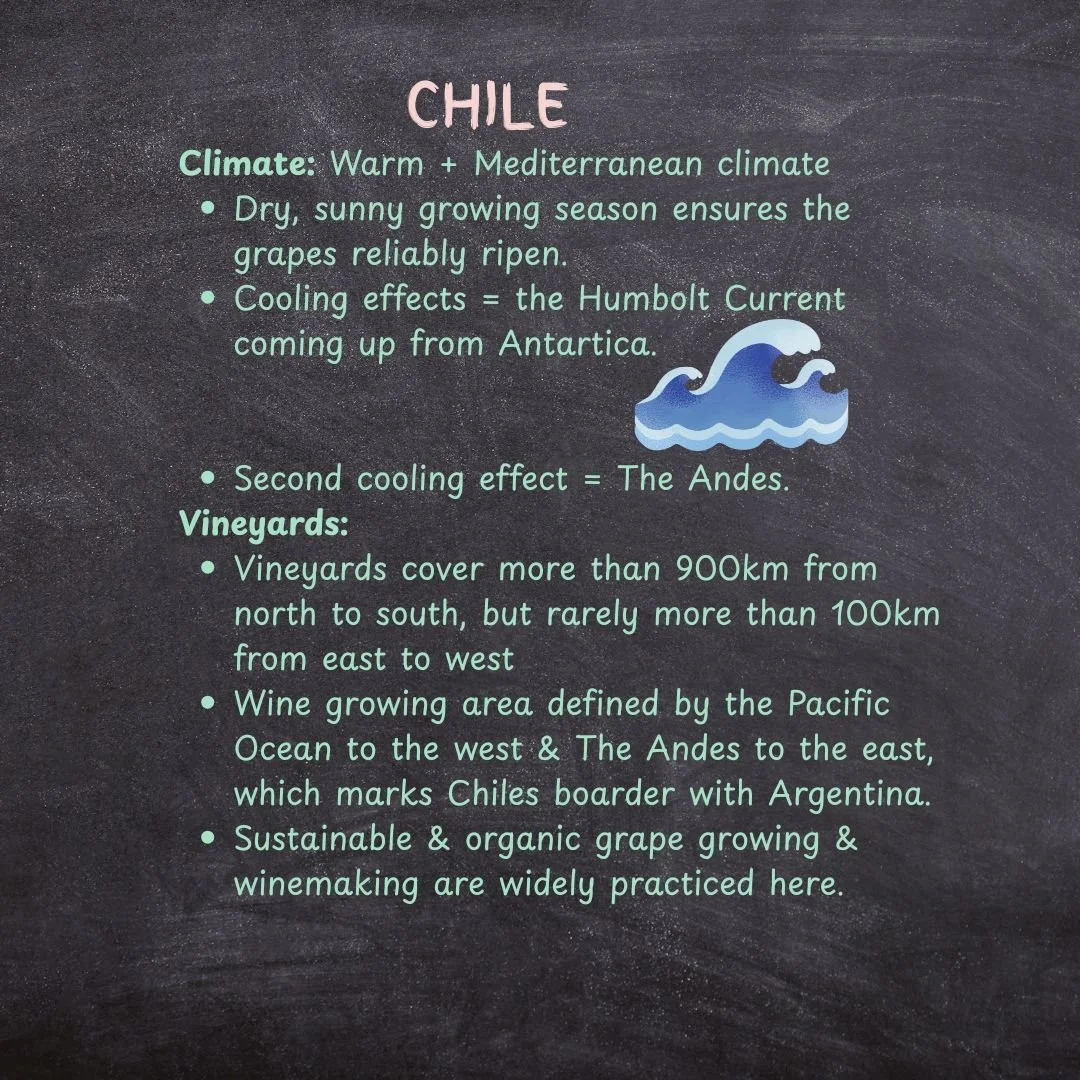
Chile’s geography really sets the stage for its wines. With the Pacific Ocean to the west and the Andes Mountains to the east, winemakers can play with everything from cool coastal breezes to dry desert heat. This balance of extremes means Chile can grow a surprisingly wide range of grapes, and produce wines that feel fresh, layered, and full of personality.
Now that we’ve set the scene, let’s get a little more specific. Chile’s vineyards stretch north to south for over 1,000 kilometres, divided into regions that each bring their own flavour to the table. That ocean breeze you feel in Casablanca? It gives Sauvignon Blancs their bright acidity.
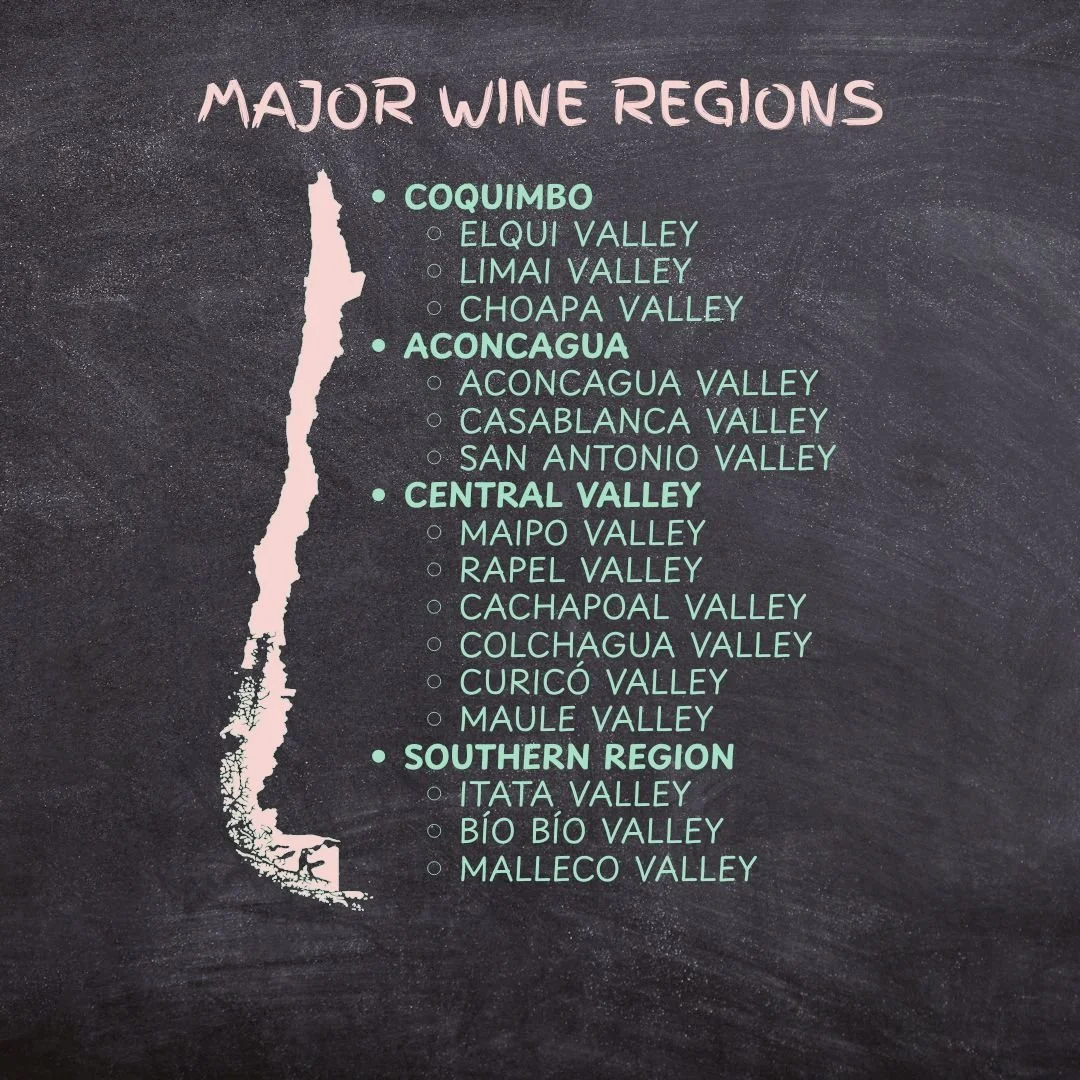
If you’re shopping at the LCBO or your local wine store, these region names can help you narrow in on your style:
Casablanca Valley → cool-climate whites
Maipo → structured Cabernet Sauvignon
Colchagua → lush reds
Once you know the lay of the land, you’ll start to notice certain grape varieties popping up on bottles. Let’s start with the whites grape varities. Chile has a knack for freshness.
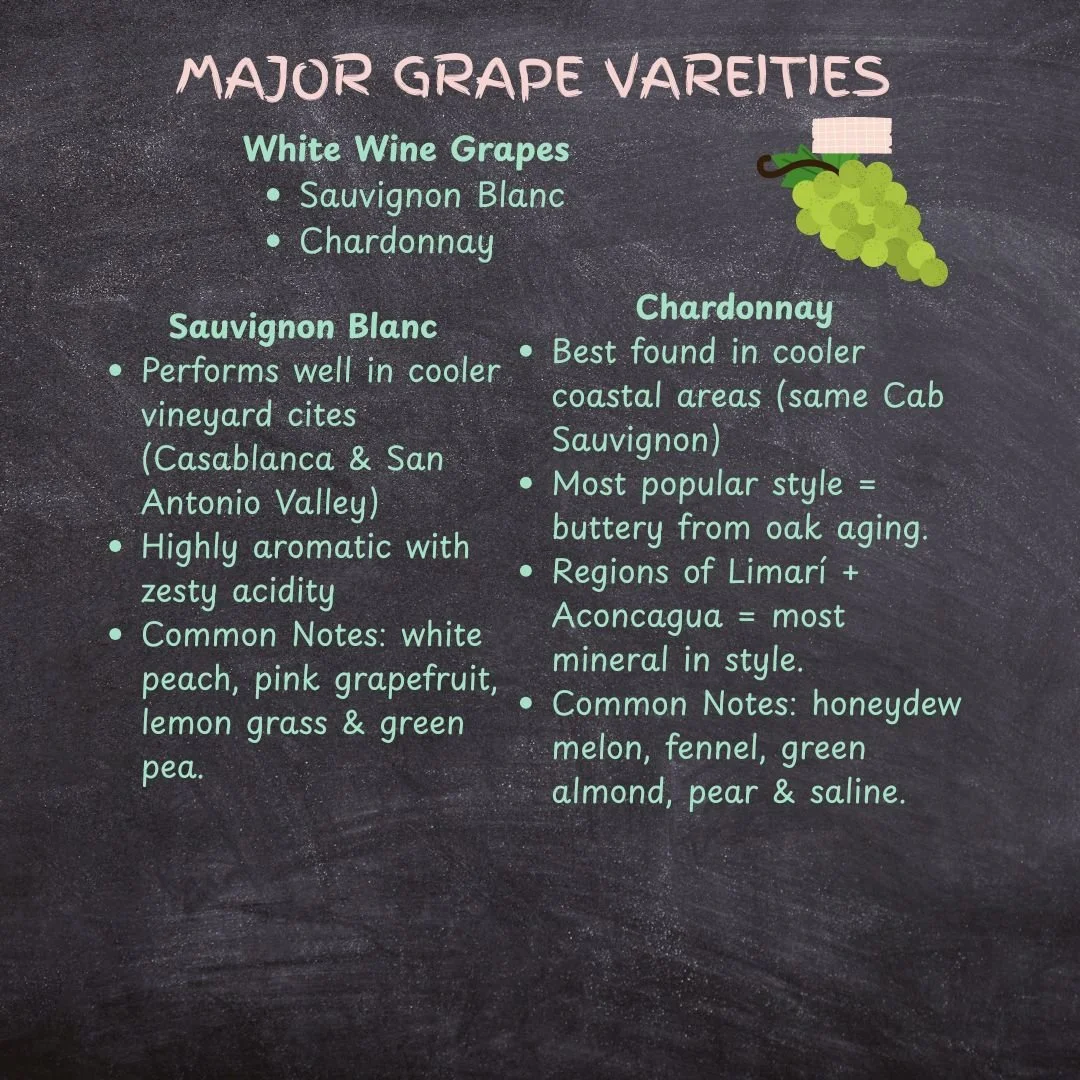
Chilean Sauvignon Blancs are all about zing with notes of lime, passionfruit, and a sea breeze finish. Perfect with goat cheese or ceviche. Chardonnay here tends to strike a balance between lush, lively, and not too oaky. A crowd-pleaser at any dinner party. Both are perfect for patio season or as an aperitif before dinner.
While Chile’s whites are all about energy and freshness, its reds tell a deeper, moodier story. These are the wines that remind you of dinner with friends — grilled steak, cozy pasta nights, or that one bottle that makes you linger at the table a little longer.
Cabernet Sauvignon leads the way here, but the real star of the show is Carménère. It’s Chile’s once-lost grape that’s now a national treasure. Let’s dive into what makes both of these reds so special.
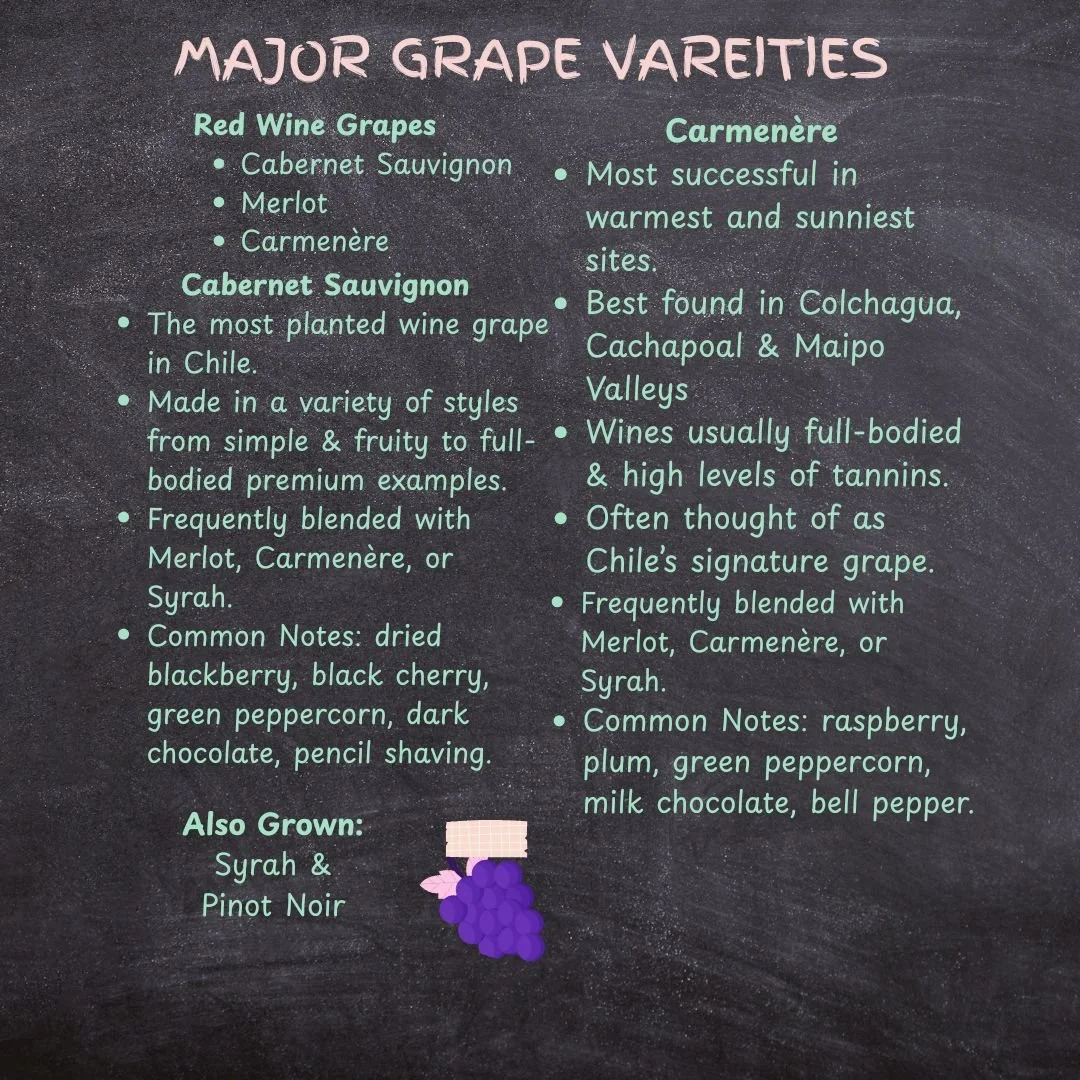
Carménère has this smoky, herbal note that makes it perfect with grilled meats or honestly, a cozy night in with takeout. If you like Merlot, you’ll probably fall for Carménère.
Don’t let the labels intimidate you — even basic-level wines from Chile often punch above their price.
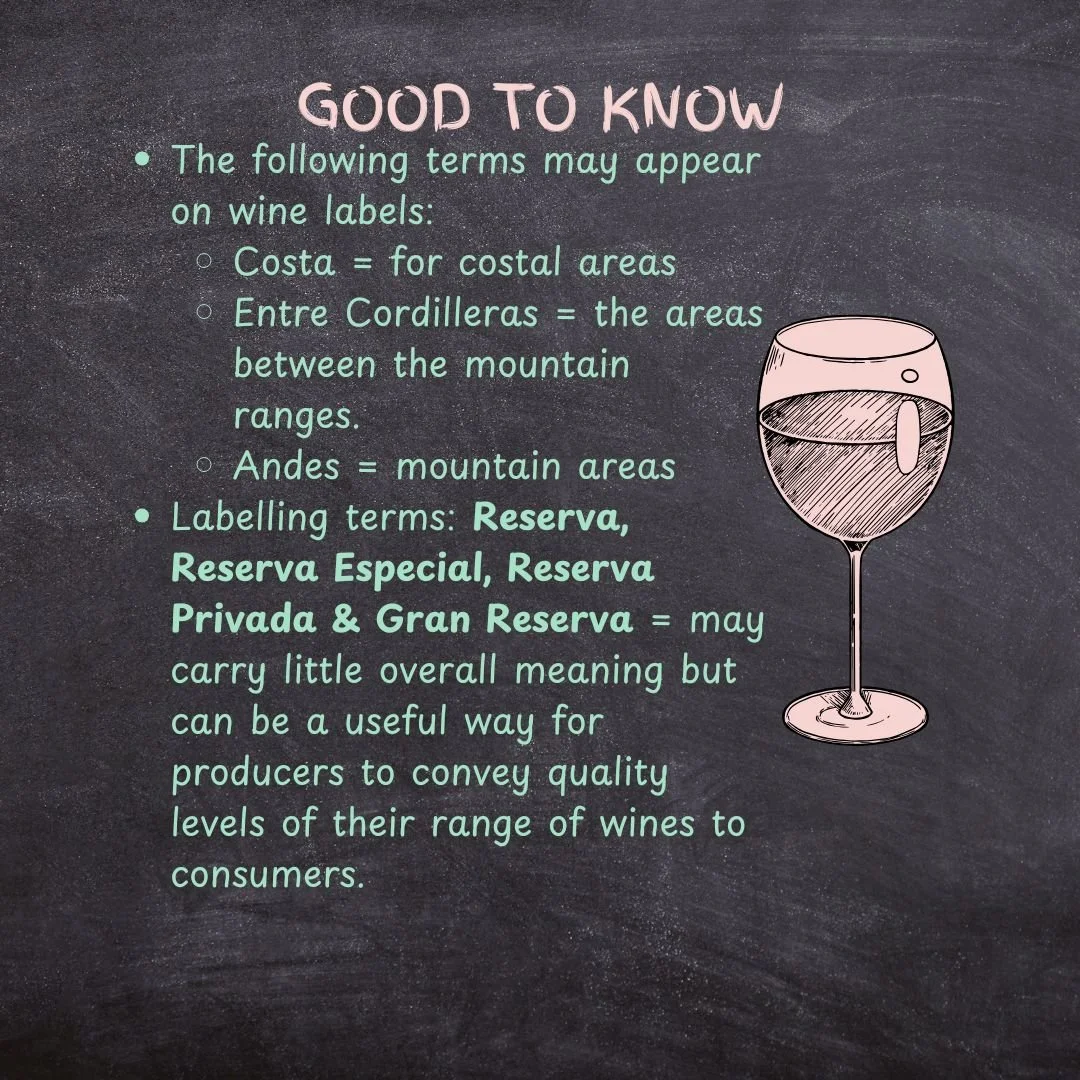
When you’re browsing bottles, a few key terms can make all the difference. Reserva may mean the wine spent a bit of time in oak — expect more structure and complexity. Gran Reserva? Even more so.
Ready to explore Chile in your glass? Here are a few bottles to start with.
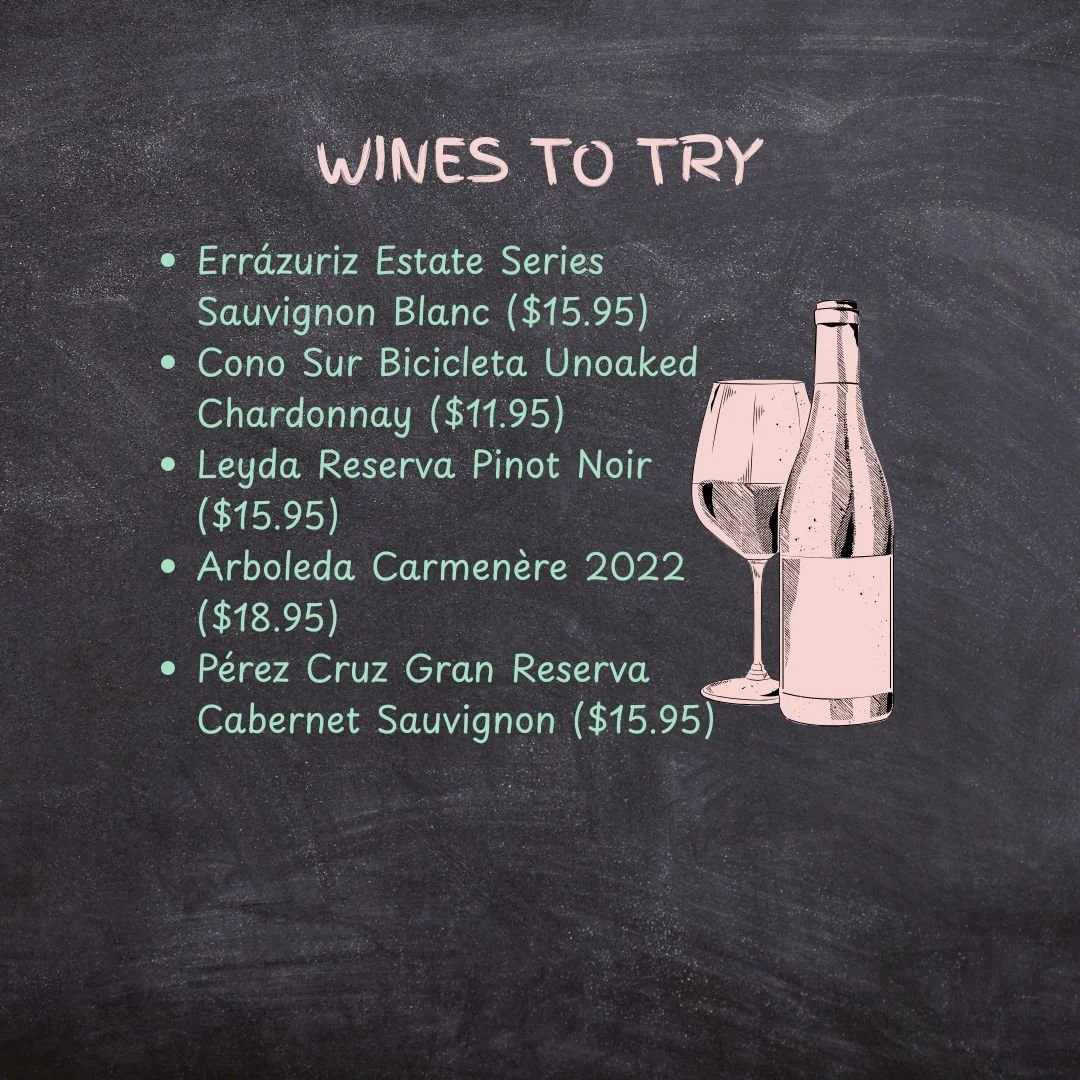
The Pérez Cruz Gran Reserva Cabernet Sauvignon is my go-to for casual Friday nights with beef empanadas or a hearty strew.
If you try one of these, tag me on Instagram @jennval_winegal
I’d love to see your pairing!
From coastal breezes to Andes altitude, Chile has some seriously sip-worthy wines that offer big flavour, great value, and tons of personality. Save this one for your next wine run, and let’s keep making wine more fun, less confusing, and a whole lot tastier.

If you enjoyed this little deep dive into Chile, sign up for my newsletter — I share seasonal wine tips, recipes, and pairings to help you feel confident entertaining with wine.
Where should Wine 101 go next? South Africa? Italy? Australia? Tell me in the comments below.